
Jackie Kennedy / Medeja / 2009
Text by Elfriede Jelinek and Ivana Sajko
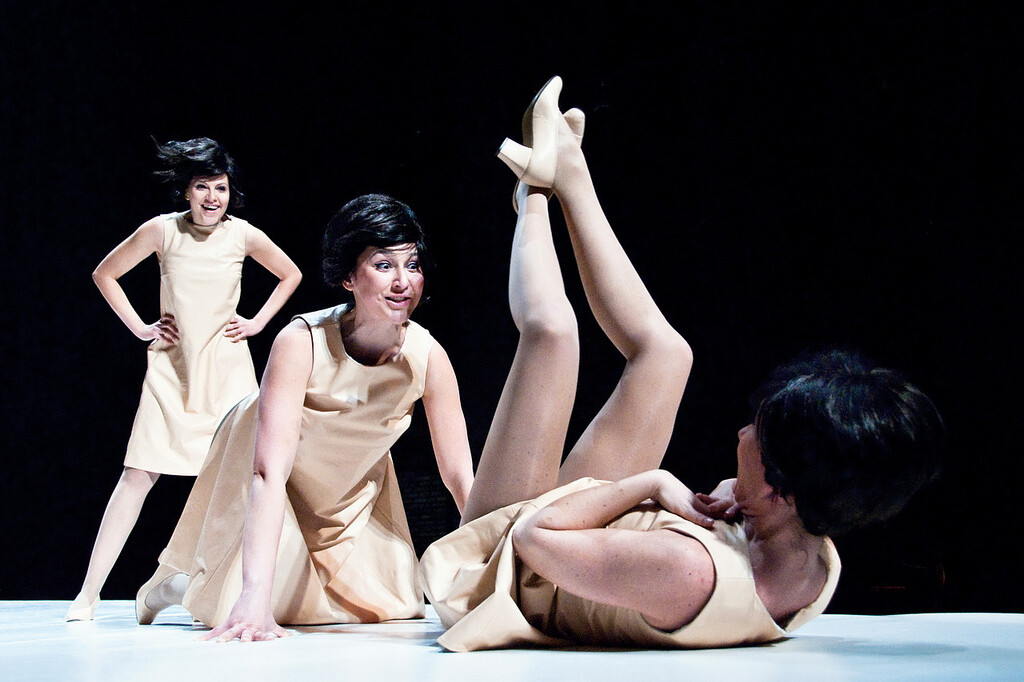
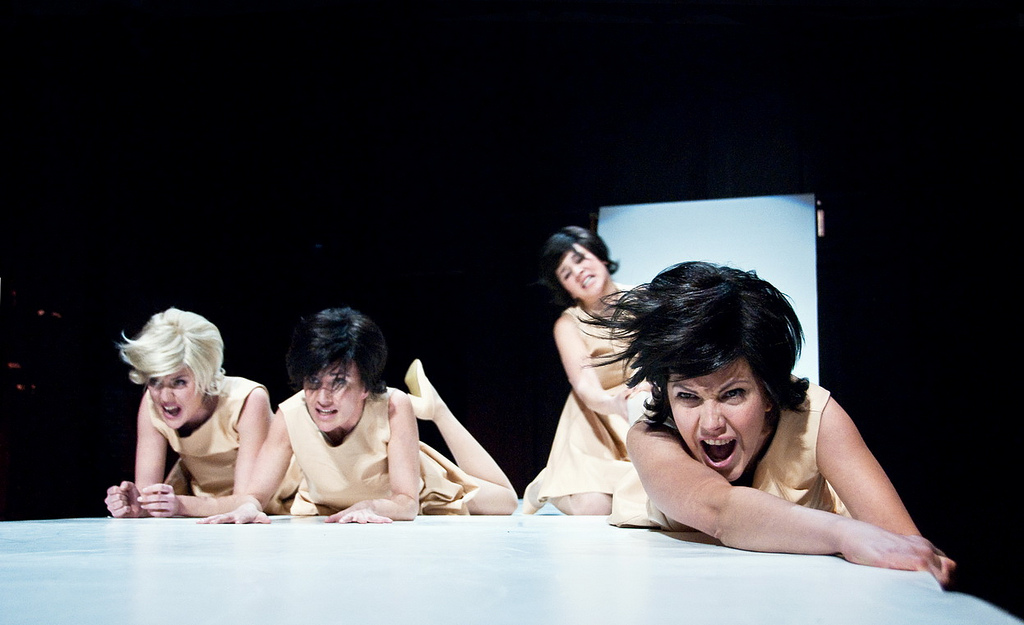
The production Jackie Kennedy / Medeja is based on a “short circuit” between two archetypal texts about women in today’s society. The first is the play Jackie by the Austrian Nobel laureate, feminist and communist Elfriede Jelinek, whose central character is Jackie (Bouvier) Kennedy, later Onassis. In the play, Jackie is shown in a zone of the unrepresentable — after all the media representations, after all the social roles, after husbands, dead children, successes and failures, after her own death. Yet this “after,” in Jelinek’s hands, brings no relief of “all right, the machine has stopped, now I can finally say what I think about all of it.” On the contrary, Jackie keeps repeating all the stereotypes of the solid, respectable woman even once they are no longer demanded of her. Even once nothing at all is demanded of her.
The second text is Medea Archetype by Ivana Sajko, one of the most radical and distinctive contemporary Croatian playwrights. Ivana Sajko’s Medeja is constructed through an unusual, fragmentary and fragile conversation with the writer who is trying to write her. Medeja, however, slips. She slides away. She refuses responsibility for her “sins,” but she does not defend herself either. She is tired, disinterested, pushed into an endless temporal perspective. She refuses every female role history has offered her (from criminal, through martyr, to heroine), and refuses even the very fact of her own existence. And so, by her own decision, she becomes “nothing.” Both texts carry pronounced feminist aspects, but these are specific and carried out in different ways. The feminism that both connects and separates these texts runs from the utter internalisation of desirable feminine behaviour (Jackie) to the refusal of any offered female role at all (Medeja).
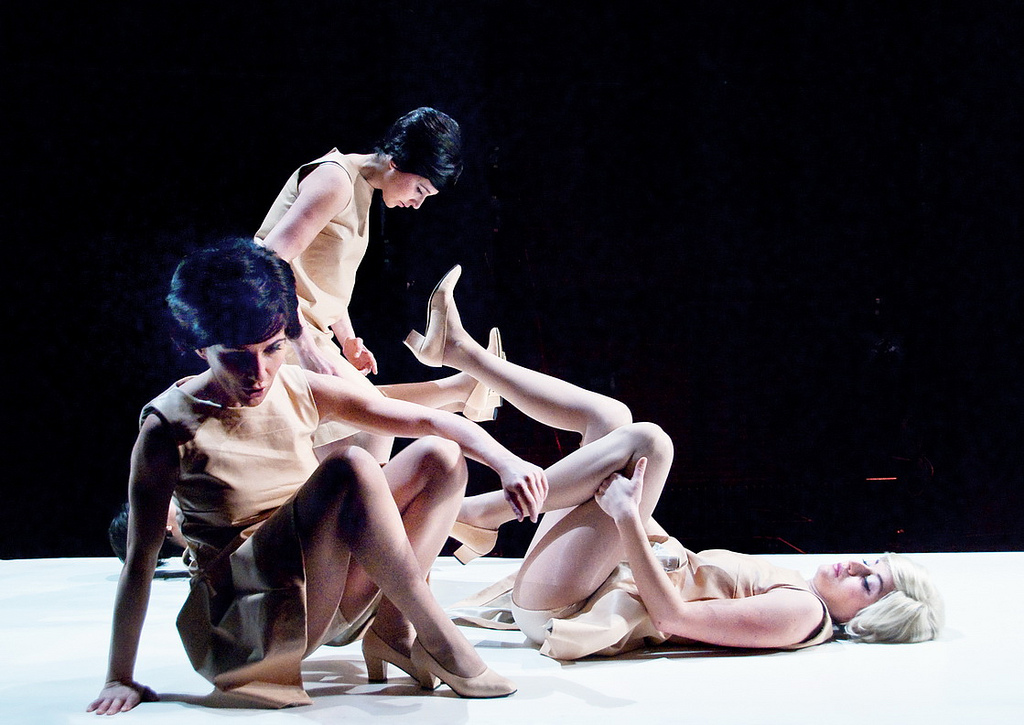
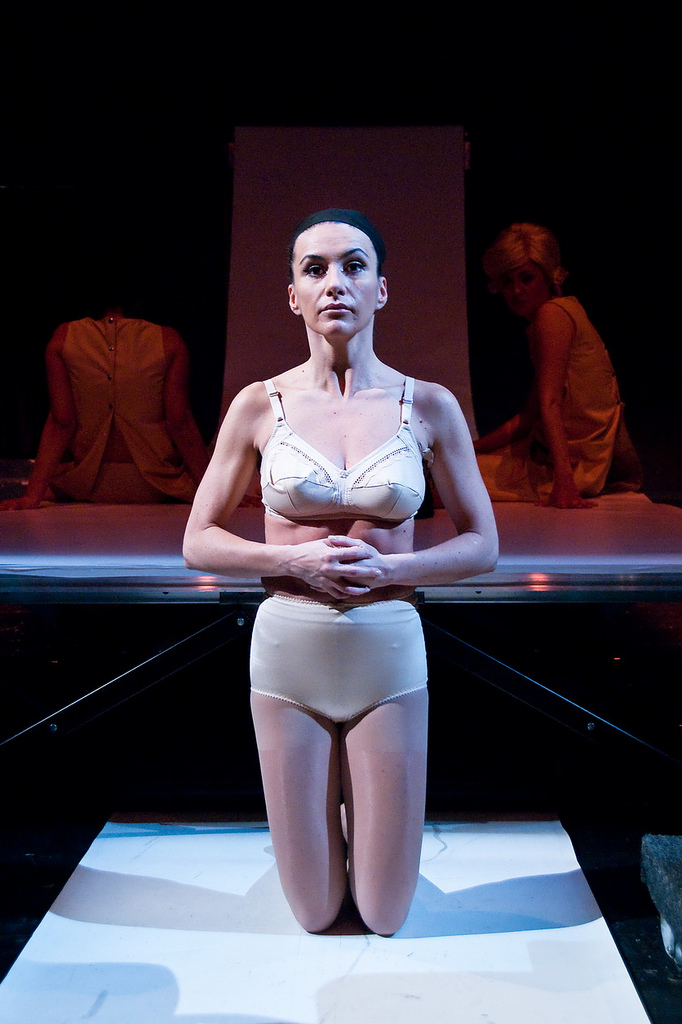
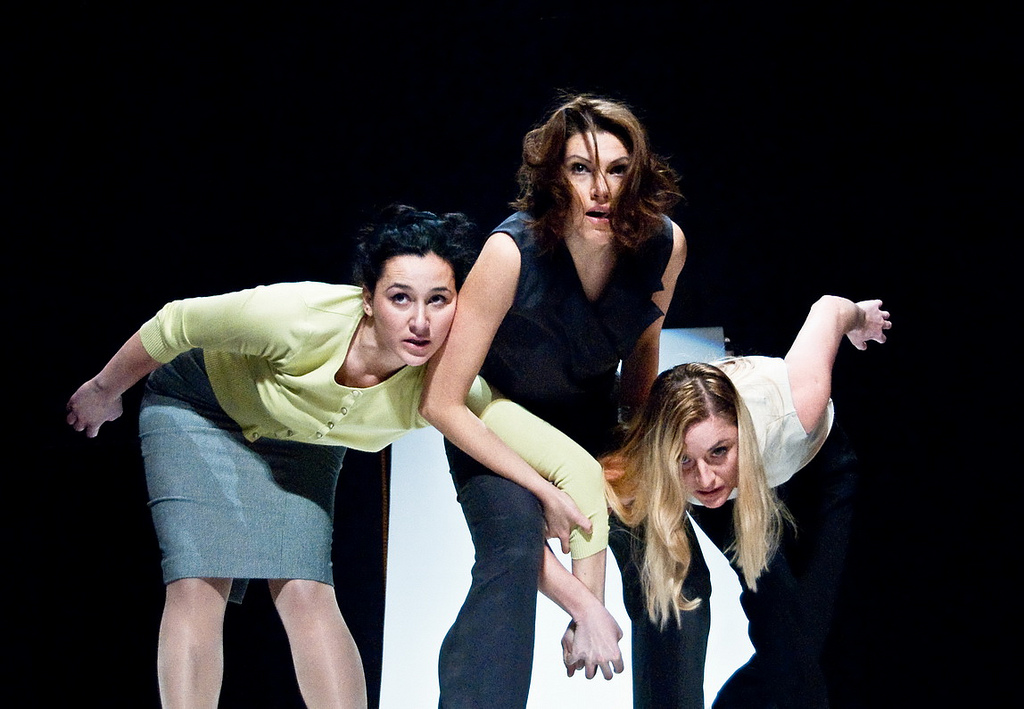
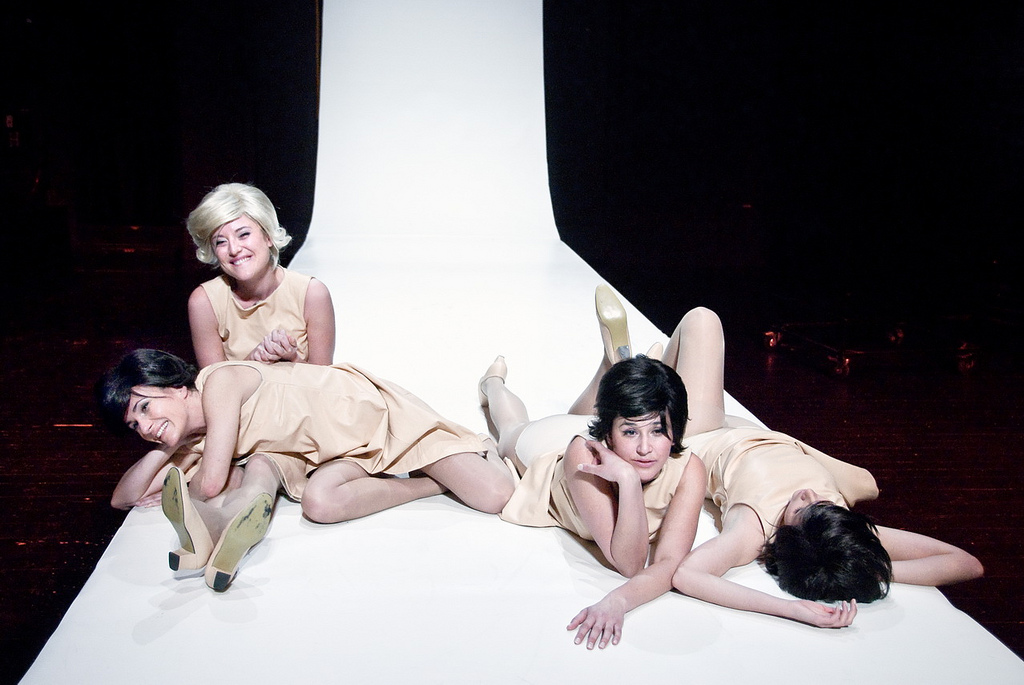
Their short circuit is embodied in the production’s subtitle, “small secrets of great figures of misogyny.” The production builds a story about ultimate misogyny, which still exists, differently disguised, in today’s society as well. Onstage, through a repetitive scenic and verbal play performed by four actresses, three possibilities are offered for the subjectivation of woman within a misogynist system: Jackie (who represents internalised misogyny, which the female subject herself continues to reproduce even when there are no external reasons to do so), Marilyn Monroe (who appears as Jackie’s “negative,” a figure who goes on carrying out the misogynist script, seemingly smoothly, sweetly and foolishly, until it kills her) and Medeja (who is a figure of ultimate critique, who does not continue anything — she stops, she refuses, and in doing so, ceases to exist). A story set up this way is without a way out. That is why it is dark, astringent, at moments bitterly witty, and without an optimistic, positive turn at the end. The production tends to brutally register the state of things and push it to the extreme, rather than propose a solution. Like a kind of social symptomatology that shifts the responsibility for a solution onto the viewers. All of us.
Directed by Bojan Đorđev, the production premiered at BITEF Teatar in Belgrade on December 22, 2009. Dramaturgical note by Ana Vujanović.
Artistic Team
Concept
Bojan Đorđev, Siniša Ilić, Maja Mirković, Marta Popivoda, Ana Vujanović
Director
Bojan Đorđev
Dramaturg
Ana Vujanović
Set design
Siniša Ilić
Costume design
Maja Mirković
Stage movement
Čarni Đerić
Lector
Dijana Marojević
Music
Franz Schubert — “Death and the Maiden”
Produced by BITEF Teatar, Belgrade, Serbia
Premiere: December 22, 2009
Premiere: December 22, 2009